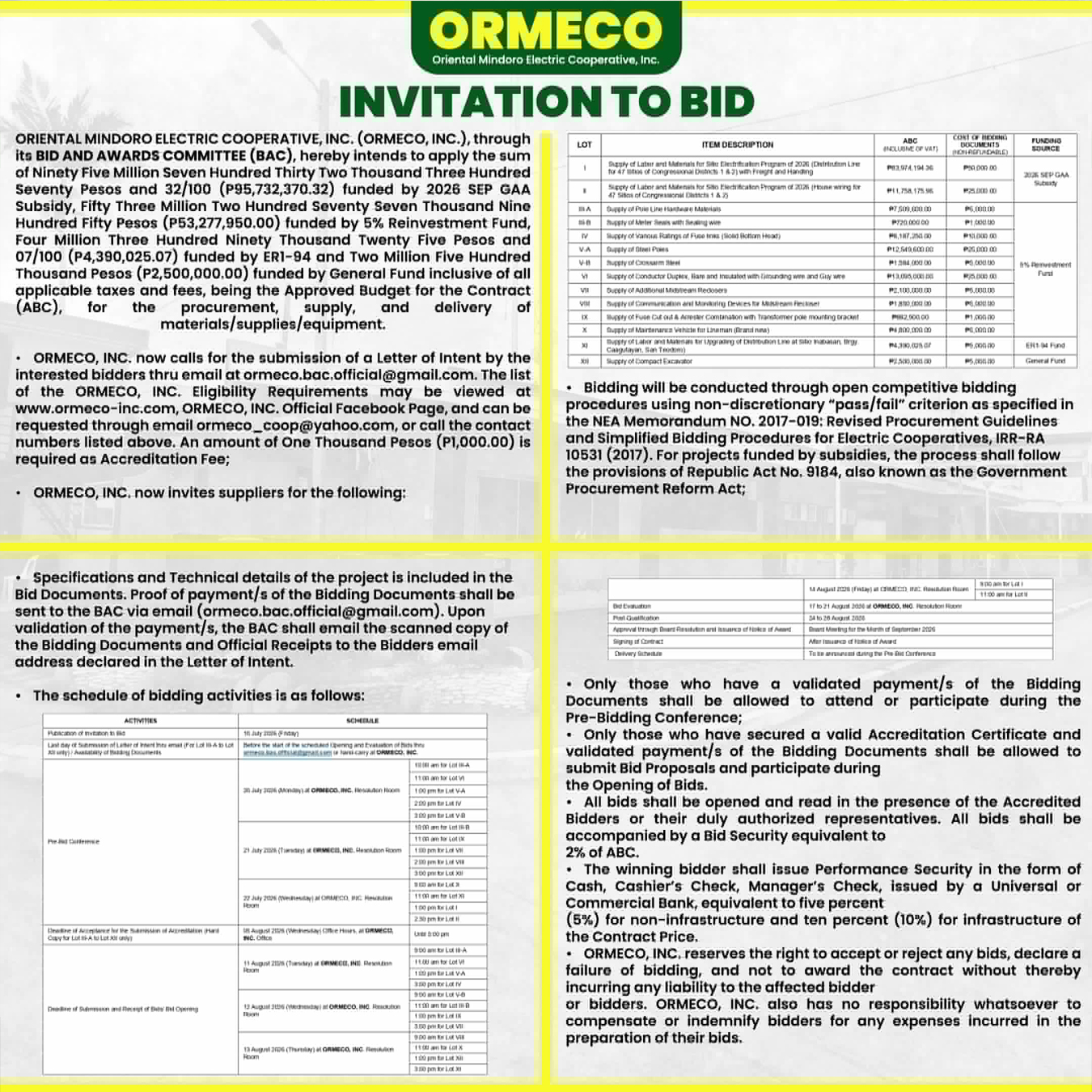




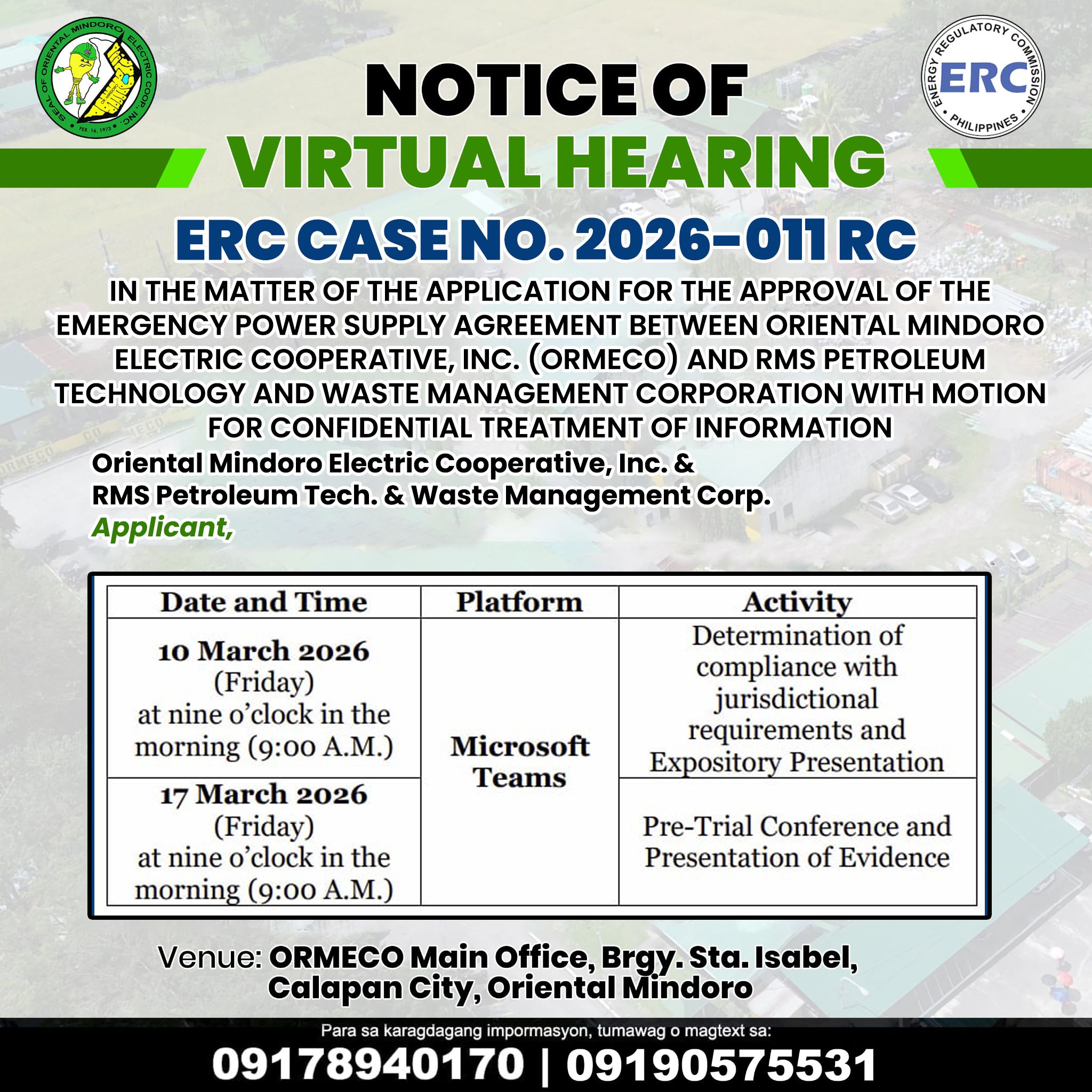

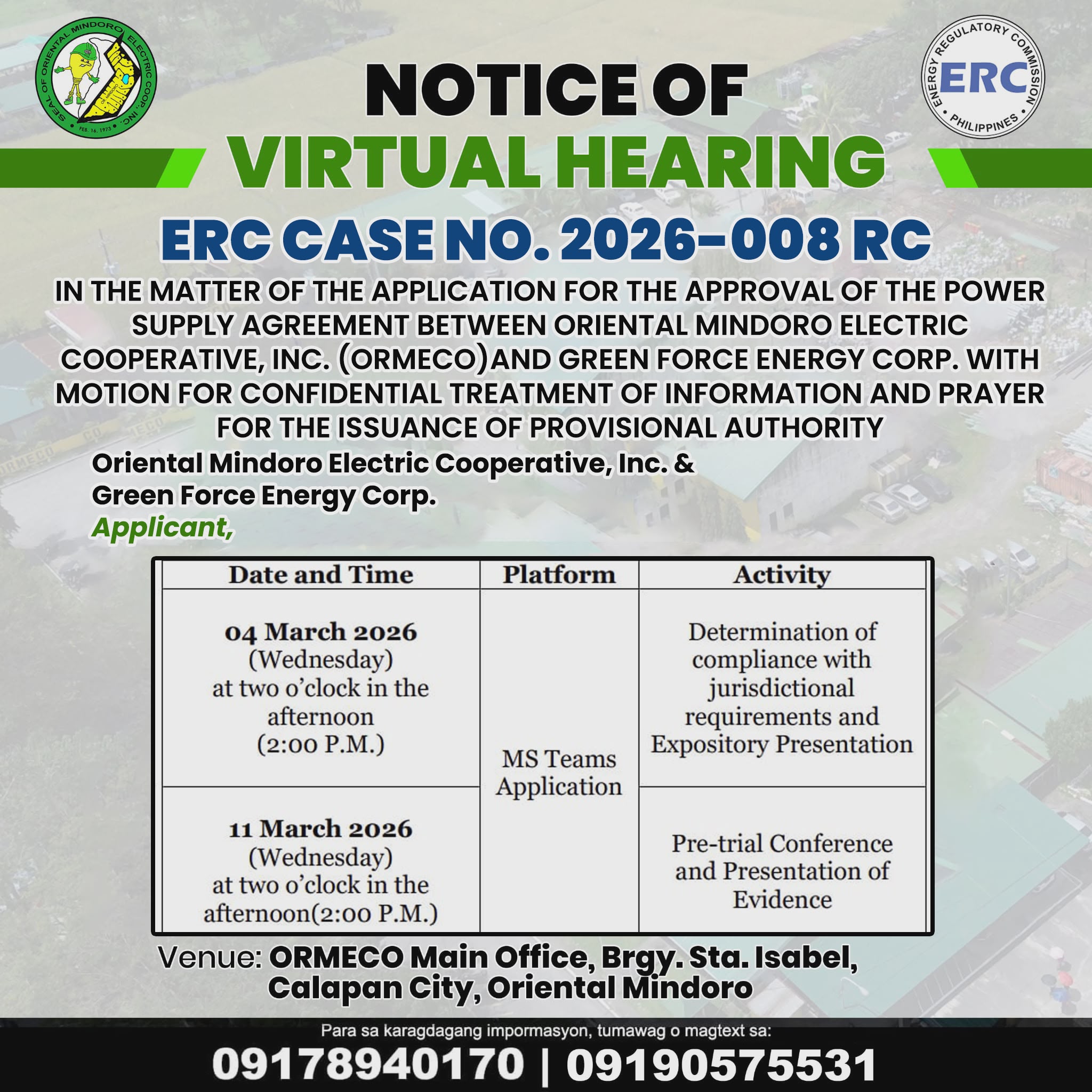
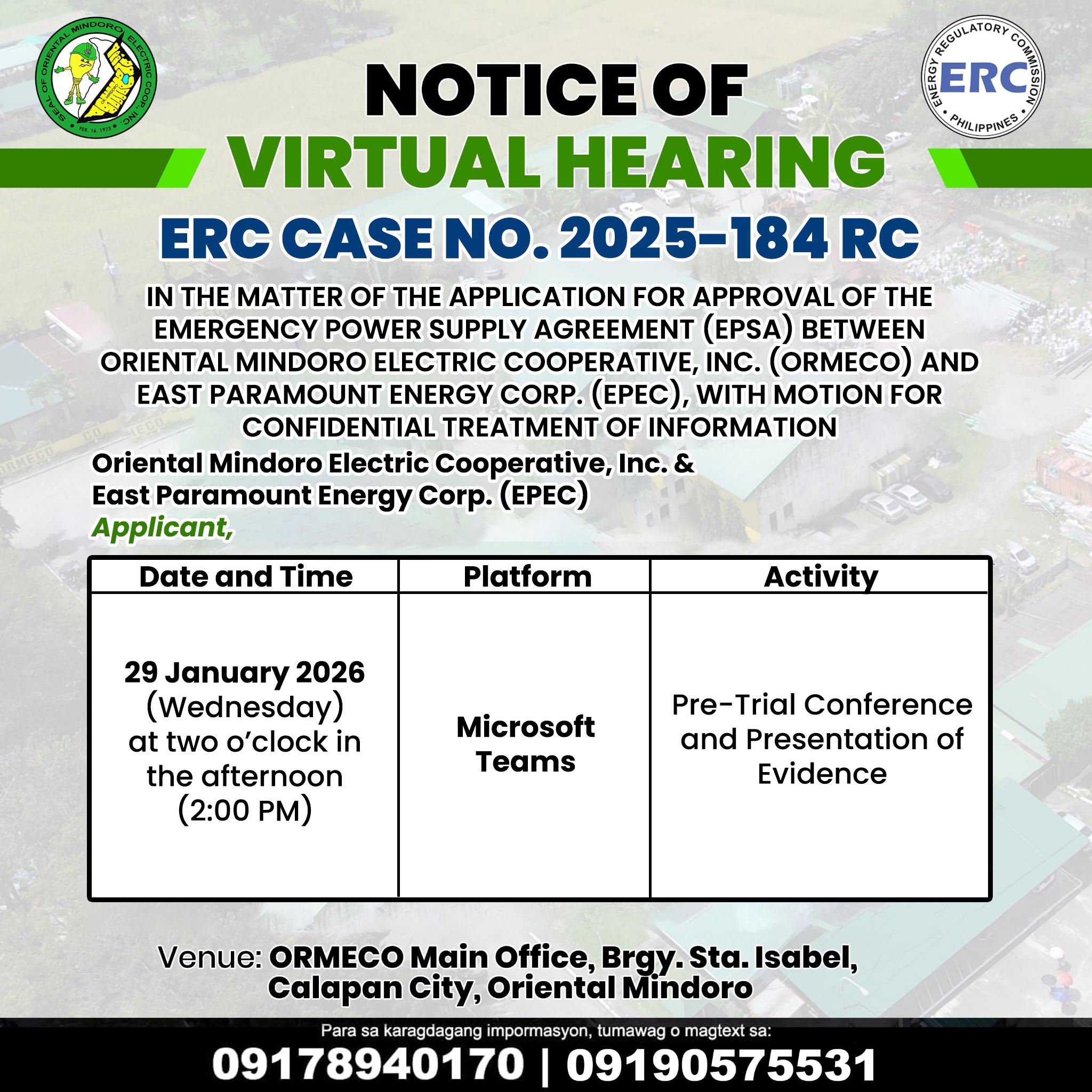


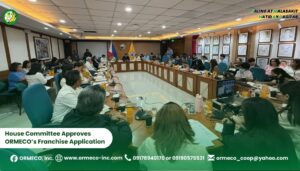
 Batasang Pambansa, Quezon City — Inaprubahan noong Miyerkules, Setyembre 23, 2026, ng House Committee on Legislative Franchises ang 𝗛𝗼𝘂𝘀𝗲 𝗕𝗶𝗹𝗹 𝗡𝗼. 𝟳𝟬𝟬𝟭, panukalang batas na naglalayong pagkalooban ng prangkisa ang Oriental Mindoro Electric Cooperative, Inc. (ORMECO).
Personal na dumalo sa pagdinig ng kumite sina ORMECO Board of Directors President 𝗥𝗼𝗯𝗲𝗿𝘁 𝗠𝗮𝗰𝗮𝗹𝗮𝗹𝗮𝗱 at General Manager 𝗘𝗻𝗴𝗿. 𝗛𝘂𝗺𝗽𝗵𝗿𝗲𝘆 𝗔. 𝗗𝗼𝗹𝗼𝗿, kasama ang iba pang kinatawan ng kooperatiba, upang suportahan ang aplikasyon.
Kabilang ang ORMECO sa walong ( 8 electric cooperatives sa bansa na umusad ang aplikasyon sa prangkisa sa naturang pagdinig. Itinaguyod ang panukala ng 𝗣𝗼𝘄𝗲𝗿 𝗕𝗹𝗼𝗰, sa pangunguna nina Hon. Presley C. De Jesus ng PHILRECA Party-List at Hon. Sergio C. Dagooc ng APEC Party-List.
Naging matibay na batayan ng pag-apruba ang mariing rekomendasyon ng 𝗡𝗮𝘁𝗶𝗼𝗻𝗮𝗹 𝗘𝗹𝗲𝗰𝘁𝗿𝗶𝗳𝗶𝗰𝗮𝘁𝗶𝗼𝗻 𝗔𝗱𝗺𝗶𝗻𝗶𝘀𝘁𝗿𝗮𝘁𝗶𝗼𝗻 (𝗡𝗘𝗔). Pinagtibay ng ahensya ang kategorya ng kooperatiba, ang naitalang 𝟲% 𝗱𝗶𝘀𝘁𝗿𝗶𝗯𝘂𝘁𝗶𝗼𝗻 𝘀𝘆𝘀𝘁𝗲𝗺𝘀 𝗹𝗼𝘀𝘀 nito, at ang pagiging 𝗰𝘂𝗿𝗿𝗲𝗻𝘁 sa mga obligasyong pambayad sa NEA at sa mga power supplier. Nagpahayag din ng buong suporta ang 𝗘𝗻𝗲𝗿𝗴𝘆 𝗥𝗲𝗴𝘂𝗹𝗮𝘁𝗼𝗿𝘆 𝗖𝗼𝗺𝗺𝗶𝘀𝘀𝗶𝗼𝗻 (𝗘𝗥𝗖) at ng 𝗕𝘂𝗿𝗲𝗮𝘂 𝗼𝗳 𝗜𝗻𝘁𝗲𝗿𝗻𝗮𝗹 𝗥𝗲𝘃𝗲𝗻𝘂𝗲 (𝗕𝗜𝗥).
Mahalaga ang prangkisang ito sapagkat ito ang legal na batayan upang maipagpatuloy ng ORMECO ang mandato nitong maghatid ng maaasahan, episyente, at abot-kayang serbisyo ng kuryente sa mga member-consumer-owners sa buong lalawigan ng Oriental Mindoro.
Taos-pusong pasasalamat ang ipinaaabot ng pamunuan ng ORMECO sa Power Bloc, sa mga kasapi ng House Committee on Legislative Franchises, sa APEC Partylist, PhilRECA Partylist, sa National Electrification Administration, Energy Regulatory Commission, at Bureau of Internal Revenue Philippines sa kanilang tiwala at suporta. Patuloy na tututukan ng kooperatiba ang mga susunod na yugto ng proseso tungo sa ganap na pagsasabatas ng panukala.
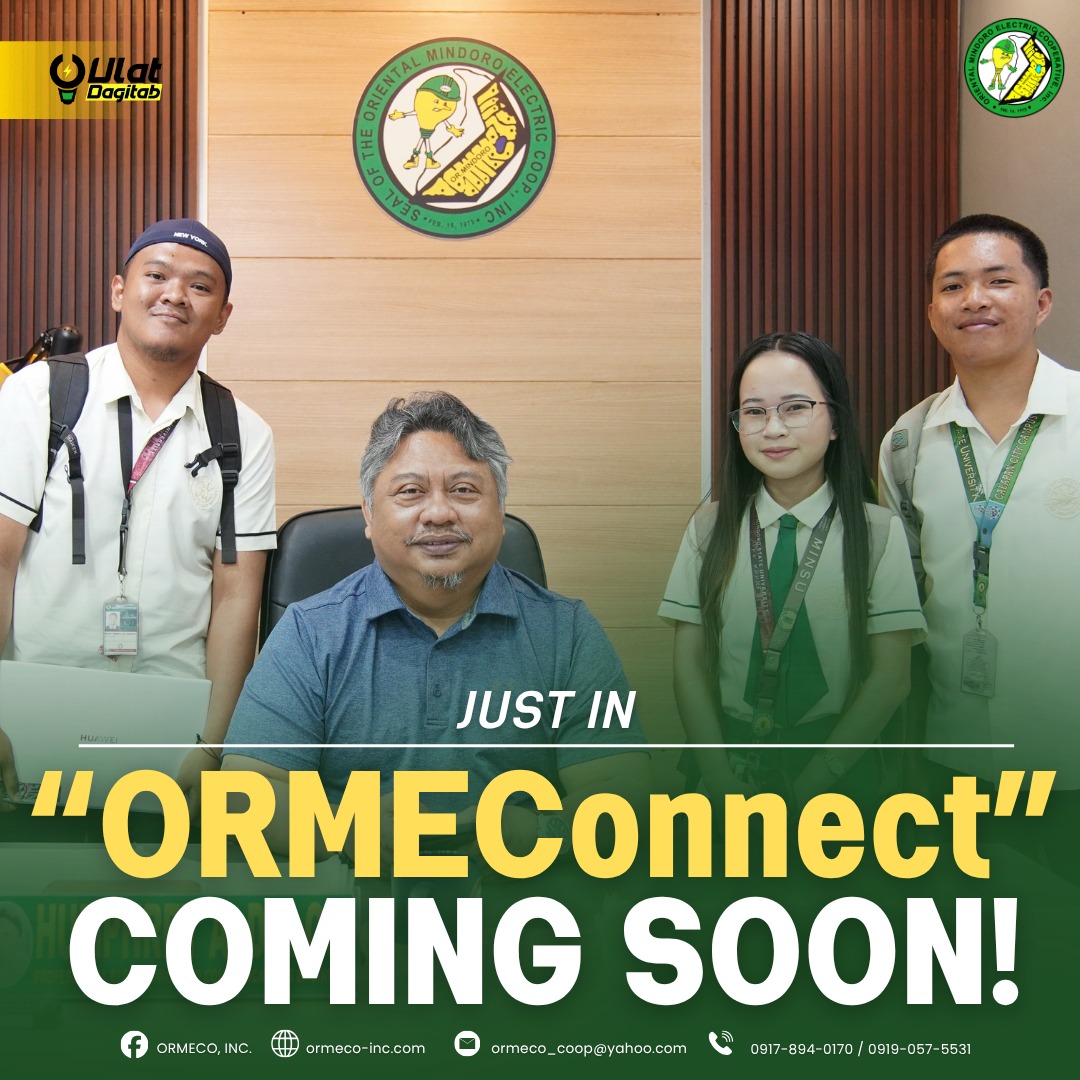 Muling ipinamalas ng mga mag-aaral mula sa 𝐌𝐢𝐧𝐝𝐨𝐫𝐨 𝐒𝐭𝐚𝐭𝐞 𝐔𝐧𝐢𝐯𝐞𝐫𝐬𝐢𝐭𝐲 (𝐌𝐢𝐧𝐬𝐔), 𝐂𝐚𝐥𝐚𝐩𝐚𝐧 𝐂𝐚𝐦𝐩𝐮𝐬 ang kanilang husay sa larangan ng teknolohiya sa pamamagitan ng isang makabagong 𝐜𝐚𝐩𝐬𝐭𝐨𝐧𝐞 𝐩𝐫𝐨𝐣𝐞𝐜𝐭 na naglalayong makatulong sa pagpapahusay ng serbisyo ng 𝐎𝐫𝐢𝐞𝐧𝐭𝐚𝐥 𝐌𝐢𝐧𝐝𝐨𝐫𝐨 𝐄𝐥𝐞𝐜𝐭𝐫𝐢𝐜 𝐂𝐨𝐨𝐩𝐞𝐫𝐚𝐭𝐢𝐯𝐞, 𝐈𝐧𝐜. (𝐎𝐑𝐌𝐄𝐂𝐎, 𝐈𝐧𝐜.).
Kabilang sa mga third-year Bachelor of Science in Information Technology students na bumuo ng nasabing proyekto sina Marc Jimbell M. Cabatay, Monica C. Bacay, at Neil M. Arguelles, na lumikha ng sistemang pinamagatang “𝐎𝐑𝐌𝐄𝐂𝐨𝐧𝐧𝐞𝐜𝐭: 𝐀 𝐒𝐦𝐚𝐫𝐭 𝐐𝐑-𝐁𝐚𝐬𝐞𝐝 𝐌𝐞𝐦𝐛𝐞𝐫𝐬𝐡𝐢𝐩 𝐀𝐩𝐩 𝐰𝐢𝐭𝐡 𝐁𝐢𝐥𝐥𝐢𝐧𝐠 𝐄𝐬𝐭𝐢𝐦𝐚𝐭𝐢𝐨𝐧 𝐚𝐧𝐝 𝐒𝐞𝐫𝐯𝐢𝐜𝐞 𝐑𝐞𝐩𝐨𝐫𝐭𝐢𝐧𝐠 𝐟𝐨𝐫 𝐎𝐑𝐌𝐄𝐂𝐎, 𝐈𝐧𝐜.”
Ayon sa mga estudyante, idinisenyo ang naturang sistema upang magsilbing tulay sa pagitan ng ORMECO at ng mga member-consumer-owners (MCOs). Layunin nitong mapadali ang pag-access ng mga konsyumer sa mahahalagang serbisyo, kabilang ang mga anunsyo, incident reports, aplikasyon para sa mga benepisyo, iskedyul ng mga seminar, gayundin ang pagtingin sa kanilang historical records at billing information.
Pinili ng mga naturang estudyante ang ORMECO bilang kanilang capstone client bilang bahagi ng kanilang layunin na makapag-ambag ng mga makabagong solusyon tungo sa higit na episyente at mabilis na paghahatid ng serbisyo publiko.
Ayon kay 𝐆𝐞𝐧𝐞𝐫𝐚𝐥 𝐌𝐚𝐧𝐚𝐠𝐞𝐫 𝐇𝐮𝐦𝐩𝐡𝐫𝐞𝐲 𝐃𝐨𝐥𝐨𝐫, bukas ang pamunuan ng ORMECO sa mga inobasyon at pakikipagtulungan mula sa kabataan at mga institusyong pang-akademiko na naglalayong higit pang mapahusay ang serbisyong ipinagkakaloob sa mga konsyumer.
Sa pamamagitan ng naturang inisyatiba, inaasahang lalo pang mapatatag ang ugnayan sa pagitan ng ORMECO at ng mga konsyumer nito, sa tulong ng makabagong teknolohiya.
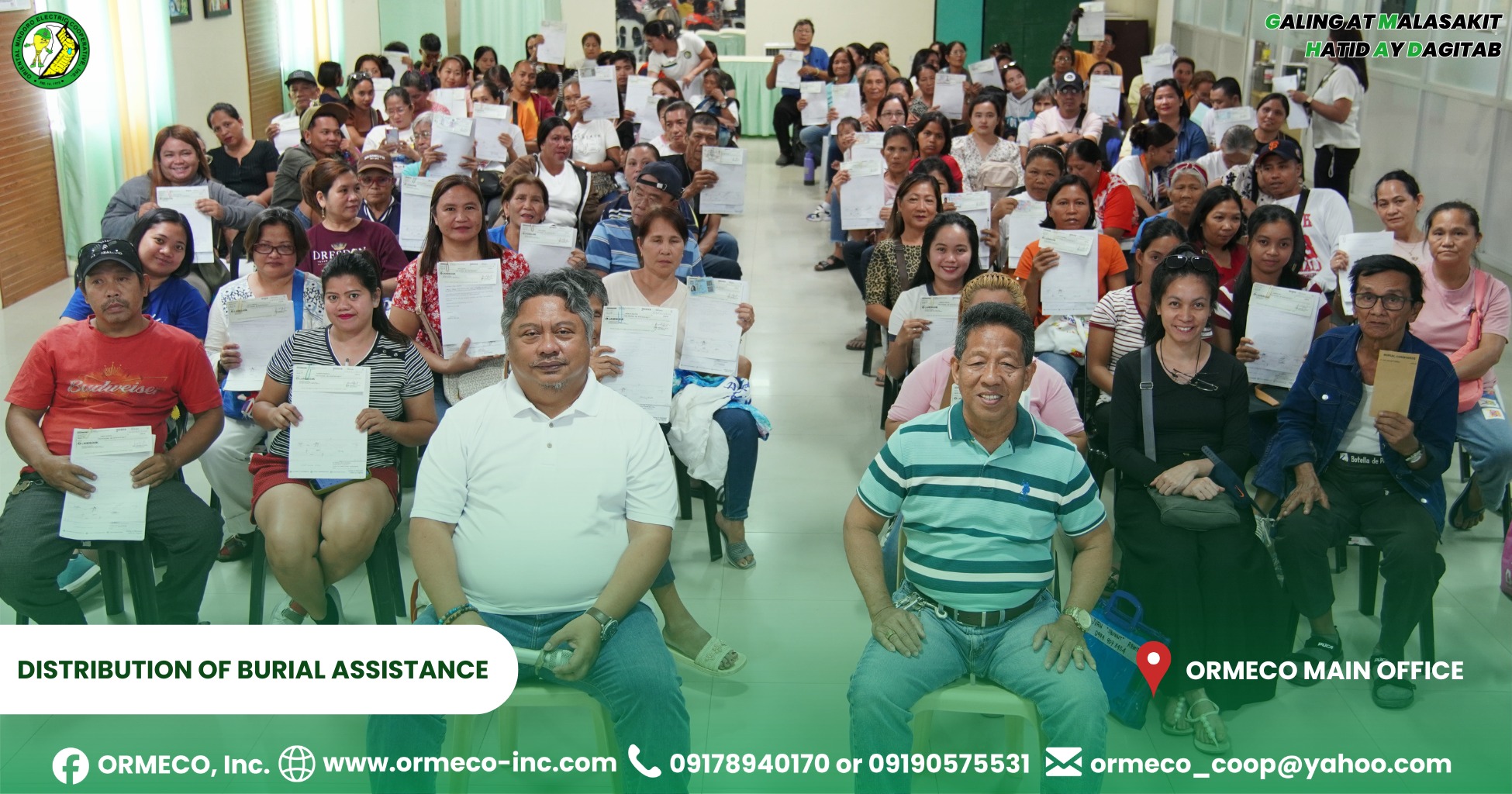
4 Mayo 2026, Namahagi ang Oriental Mindoro Electric Cooperative, Inc. (ORMECO, Inc.) ng tig-₱5,000 burial assistance sa 76 na benepisyaryo ng mga yumaong Member-Consumer-Owners (MCOs). Ang inisyatibong ito, na pinondohan mula sa revolving fund ng kooperatiba, ay naglalayong magbigay ng agarang tulong pinansyal sa mga pamilyang nagluluksa.
Ayon kay General Manager Engr. Humphrey A. Dolor, prayoridad ng kaniyang administrasyon ang mabilis na paglalabas ng mga benepisyong ito sa kabila ng mga hamong pinansyal. Ang programa ay pormal na pinagtibay noong 2015 (AGMA Resolution No. 15-02). Kasabay nito, binigyang-diin ng pamunuan ang kahalagahan ng transparency sa pag-uulat ng tunay na estado ng kooperatiba upang matiyak na tapat at tama ang impormasyong nakakarating sa mga kasapi.
Nagpaabot din ng mensahe ng pagbati si Direktor Roberto ‘Bobby’ Macalalad, ang Presidente ng Hunta Direktiba mula sa Distrito III (Naujan at Victoria). Sa kaniyang pahayag, nagbahagi rin siya ng mga mahahalagang impormasyon hinggil sa operasyon ng ORMECO.
Huwag kalimutang i-follow ang ORMECO Facebook page para sa mga susunod na update sa Burial Assistance. Kung kasama kayo sa susunod na batch, direktang makikipag-ugnayan ang kooperatiba sa inyo gamit ang text o tawag.
Upang malaman kung paano mag-apply ng Burial Assistance, i-click lamang ang link na ito:
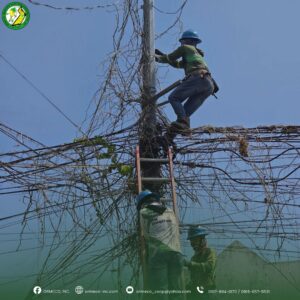 Nakiisa ang Oriental Mindoro Electric Cooperative, Inc. (ORMECO) sa joint cable bundling operation na inilunsad ng City Engineering and Public Works Department ng Calapan City, kasama ang City Environment and Natural Resources Department, Public Safety Department, at ang Office of the City Mayor noong ika-23 ng Abril 2026.
Ang operasyong ito ay isinagawa sa Calapan J.P Rizal Street, bilang bahagi ng patuloy na urban development initiative ng lungsod na naglalayong linisin at ayusin ang mga overhead wires at cables sa Central Business District.
Aktibong lumahok ang ORMECO sa joint operation, na nagpapakita ng pangako ng kooperatiba sa pakikipagtulungan sa pamahalaan para sa kapakanan ng publiko.
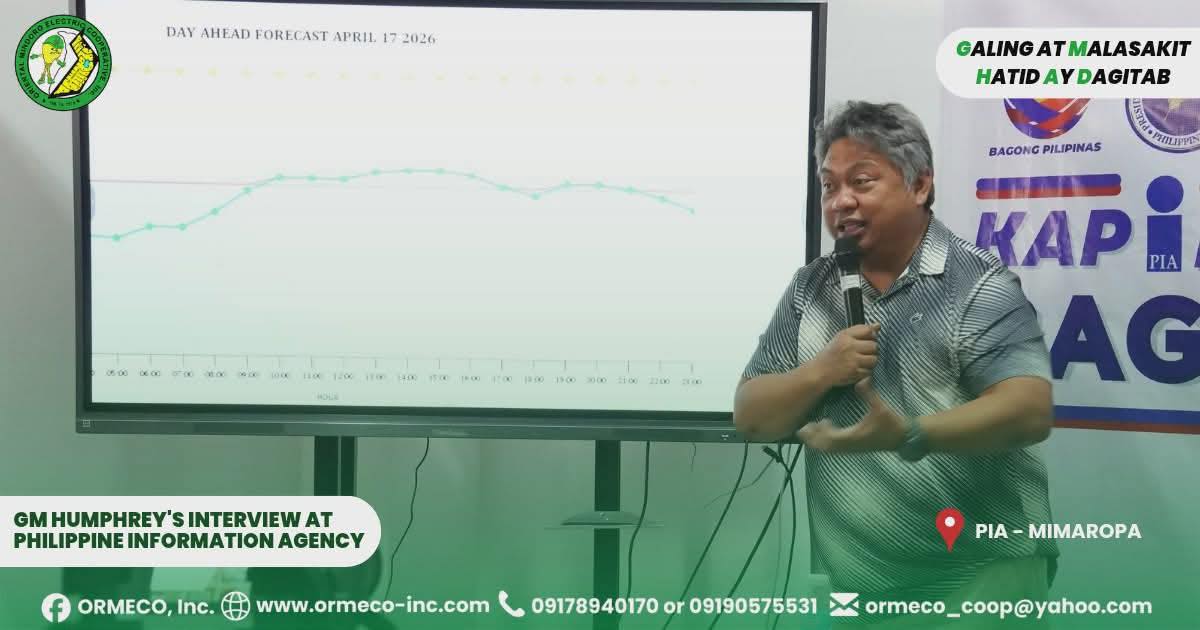
Tahasang sinagot ni Oriental Mindoro Electric Cooperative, Inc. (ORMECO, Inc.) General Manager Engr. Humphrey A. Dolor ang mga katanungan ng mga mamamahayag hinggil sa singil sa kuryente, suplay ng enerhiya, at paglaganap ng iligal na koneksyon sa lalawigan sa isinagawang 𝐊𝐚𝐩𝐢𝐡𝐚𝐧 𝐬𝐚 𝐁𝐚𝐠𝐨𝐧𝐠 𝐏𝐢𝐥𝐢𝐩𝐢𝐧𝐚𝐬 𝐧𝐠 𝐏𝐡𝐢𝐥𝐢𝐩𝐩𝐢𝐧𝐞 𝐈𝐧𝐟𝐨𝐫𝐦𝐚𝐭𝐢𝐨𝐧 𝐀𝐠𝐞𝐧𝐜𝐲 (𝐏𝐈𝐀) noong Abril 16.
Sa gitna ng mga pangamba ng publiko ukol sa pagtaas ng singil sa kuryente, nilinaw ni GM Dolor na ang mga 𝐩𝐚𝐠𝐛𝐚𝐛𝐚𝐠𝐨 𝐬𝐚 𝐬𝐢𝐧𝐠𝐢𝐥 sa kuryente ay dumaraan sa pagsusuri at pag-apruba ng 𝐄𝐧𝐞𝐫𝐠𝐲 𝐑𝐞𝐠𝐮𝐥𝐚𝐭𝐨𝐫𝐲 𝐂𝐨𝐦𝐦𝐢𝐬𝐬𝐢𝐨𝐧 (𝐄𝐑𝐂). Binigyang-diin niyang ang kooperatiba ay tagapaghatid lamang ng serbisyo, habang ang mga ipinapatupad na singil ay nakabatay sa halaga ng suplay mula sa mga power supplier at sa umiiral na mga regulasyon. Ipinaliwanag din niya na ang pagtaas ng konsumo ng kuryente ay isa sa mga salik na nakaaapekto sa pagtaas ng taripa, sapagkat habang lumalaki ang pangangailangan sa enerhiya, tumataas din ang halaga ng suplay na kinukuha mula sa mga supplier upang matugunan ang demand ng mga miyembro kunsomidores.
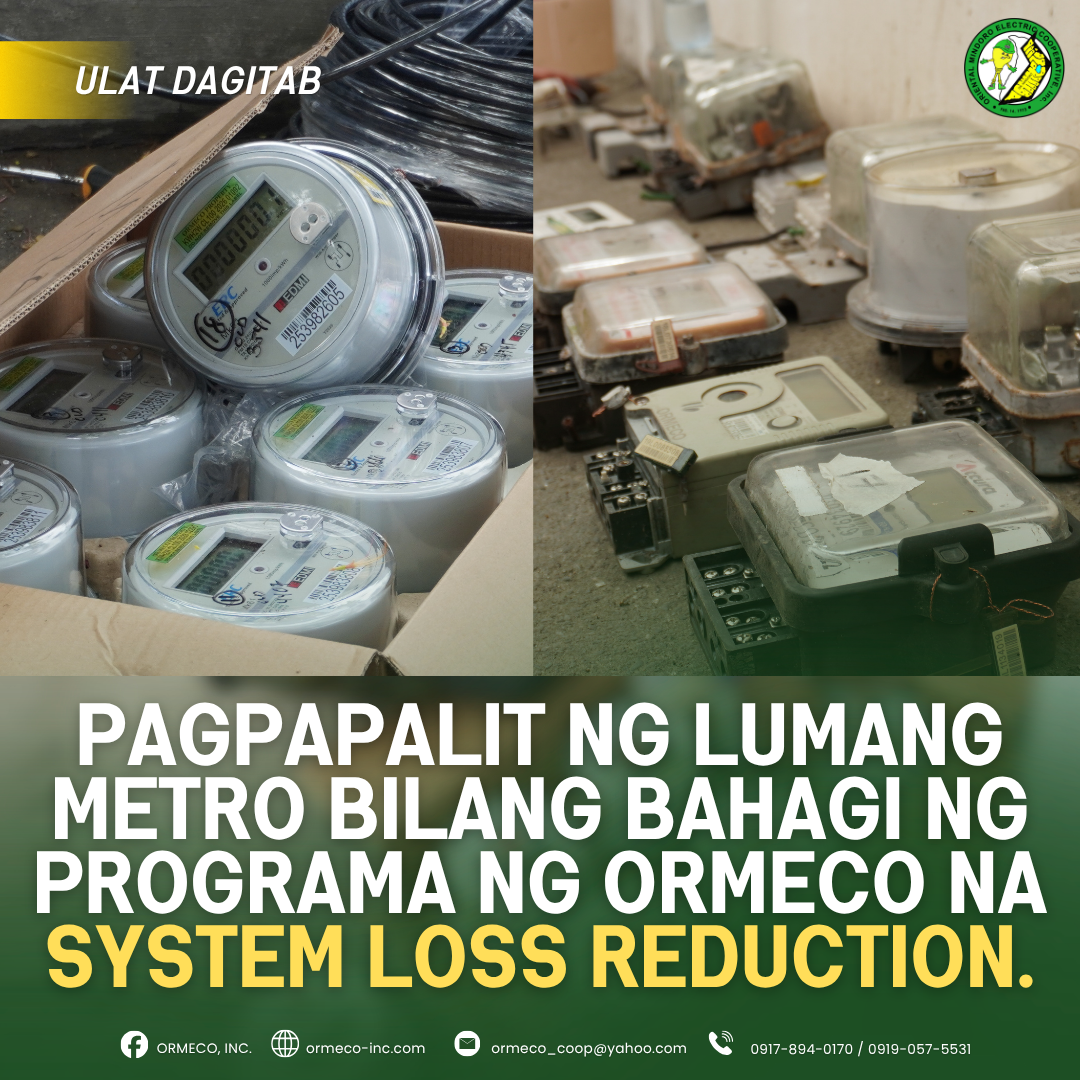
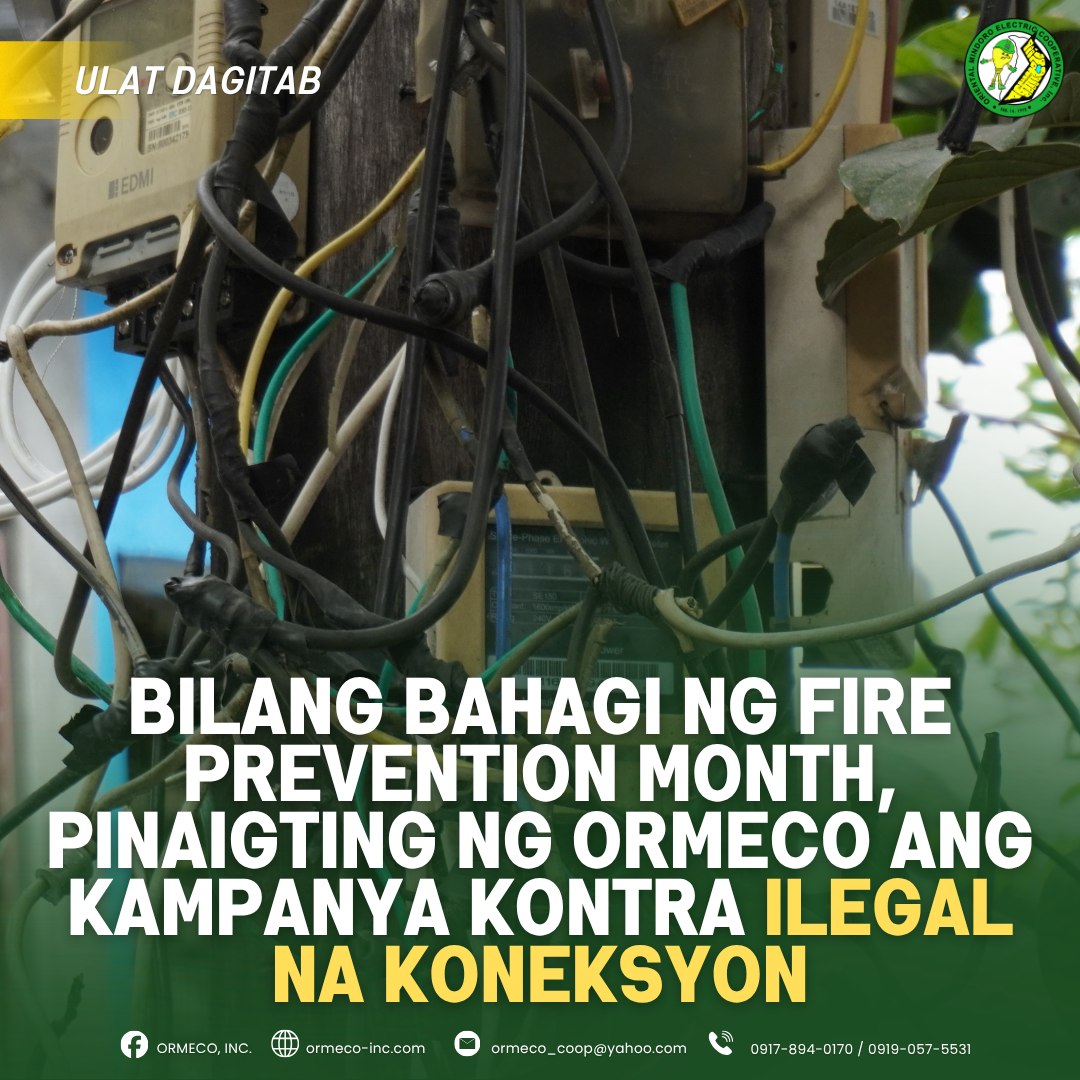
Tinalakay rin ni GM Dolor ang patuloy na paglaganap ng 𝐚𝐧𝐭𝐢-𝐩𝐢𝐥𝐟𝐞𝐫𝐚𝐠𝐞 𝐨 𝐩𝐚𝐠𝐧𝐚𝐧𝐚𝐤𝐚𝐰 𝐧𝐠 𝐤𝐮𝐫𝐲𝐞𝐧𝐭𝐞, na aniya’y may malaking epekto sa operasyon ng kooperatiba at sa kalidad ng serbisyong naipagkakaloob sa mga lehitimong konsyumer. Aniya, ang mga iligal na koneksyon ay paglabag sa 𝐑𝐞𝐩𝐮𝐛𝐥𝐢𝐜 𝐀𝐜𝐭 𝐍𝐨. 𝟕𝟖𝟑𝟐, 𝐨 𝐀𝐧𝐭𝐢-𝐄𝐥𝐞𝐜𝐭𝐫𝐢𝐜𝐢𝐭𝐲 𝐚𝐧𝐝 𝐄𝐥𝐞𝐜𝐭𝐫𝐢𝐜 𝐓𝐫𝐚𝐧𝐬𝐦𝐢𝐬𝐬𝐢𝐨𝐧 𝐋𝐢𝐧𝐞𝐬/𝐌𝐚𝐭𝐞𝐫𝐢𝐚𝐥𝐬 𝐏𝐢𝐥𝐟𝐞𝐫𝐚𝐠𝐞 𝐀𝐜𝐭 𝐨𝐟 𝟏𝟗𝟗𝟒. Sa kasalukuyan, may 𝐥𝐢𝐦𝐚𝐧𝐠 𝐤𝐚𝐬𝐨nang naihain ang ORMECO, habang mahigit 𝟏𝟎𝟎 𝐤𝐨𝐧𝐬𝐲𝐮𝐦𝐞𝐫 na ang nahuli sa paglabag.
Dahil dito, muling pinaalalahanan ng pamunuan ng ORMECO ang publiko na makiisa sa kampanya laban sa pagnanakaw ng kuryente upang mapangalagaan ang maayos at matatag na daloy ng serbisyo para sa lahat ng mga consumer-member-owners.
Hinikayat din ni GM Dolor ang mga mamimili na maging masinop at wais sa paggamit ng kuryente, lalo na sa panahong mataas ang pangangailangan sa enerhiya sa buong bansa. Aniya, ang responsableng paggamit ng kuryente ay mahalagang hakbang upang makatulong sa pagpapanatili ng sapat na suplay at maiwasan ang labis na pagtaas ng konsumo.
Bilang suporta sa paggamit ng renewable energy, ibinahagi rin ni GM Dolor na 𝐬𝐮𝐩𝐨𝐫𝐭𝐚𝐝𝐨 𝐚𝐭 𝐭𝐢𝐧𝐚𝐭𝐚𝐧𝐠𝐤𝐢𝐥𝐢𝐤 𝐧𝐠 𝐎𝐑𝐌𝐄𝐂𝐎 ang paggamit ng 𝐬𝐨𝐥𝐚𝐫 𝐞𝐧𝐞𝐫𝐠𝐲, kasabay ng isinasagawang pagtatayo ng 𝐒𝐨𝐥𝐚𝐫 𝐏𝐨𝐰𝐞𝐫 𝐏𝐥𝐚𝐧𝐭 𝐬𝐚 𝐛𝐚𝐲𝐚𝐧 𝐧𝐠 𝐁𝐚𝐧𝐬𝐮𝐝, na inaasahang mapapatakbo sa taong 2027.
Sa pamamagitan ng mga hakbang na ito, pinagtitibay ng ORMECO ang layunin nitong maihatid ang maaasahan, sapat, at matatag na serbisyo ng kuryente sa lalawigan, kasabay ng pagsusulong ng pananagutan at pakikilahok ng publiko sa pangangalaga ng sistema ng elektripikasyon.
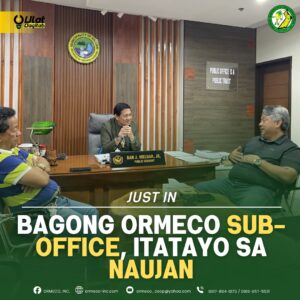 Pinalawak na ng ORMECO ang opisina nito sa bayan ng Naujan sa pamamagitan ng planong maglagay ng bagong sub-office sa Barangay Evangelista bilang bahagi ng patuloy na pagsisikap na mapalapit ang serbisyo sa mga Member-Consumer-Owners (MCO’s).
Bumisita sina Board President Roberto Macalalad at General Manager Humphrey Dolor sa opisina ng Punong bayan Hon.Henry Teves at Pangalawang Punong Bayan Hon. Dan J. Melgar, Jr. upang talakayin ang itatayong sub-office, na magiging sentro ng collection at maintenance operations sa lugar. Sa pamamagitan nito, mas magiging mabilis ang pagtugon ng mga lineman sa mga report ng mga residente sa kanilang area.
Bukod sa bagong sub-office sa Barangay Evangelista, patuloy na nananatili ang kasalukuyang opisina ng ORMECO sa District 3, Barangay Pinagsabangan II, na nagsisilbi sa mga nakapaligid na komunidad.
“Magkatulungan po tayo,” ani GM Dolor, habang ipinahayag niya ang buong paghandang tumulong sa munisipalidad sa anumang paraan na magagawa ng kooperatiba. Bukas namang tinanggap ni Bise Alkalde Melgar ang mungkahi, na nagpakita ng positibong tugon sa pakikipagtulungan ng LGU at ORMECO.
Sa pagbubukas ng bagong sub-office sa Barangay Evangelista, inaasahang mapapakinabangan ng mga residente ng Naujan ang mas malapit at mas mabilis na serbisyo — mula sa pagbabayad ng kuryente hanggang sa agarang pagtugon ng maintenance team sa anumang pangangailangan sa lugar.
Kasama po sa layunin ng ORMECO ang magbigay ng kagaangan sa ating mga katuwang sa buhay. Alinsunod sa batas, maaari pong makakuha ng discount sa inyong monthly electric bill ang mga kwalipikadong Senior Citizens.
 Sinu-sino ang pwedeng mag-apply?
• Mga Senior Citizens na ang konsumo ay hindi hihigit sa 100 kWh bawat buwan.
• Ang account ay dapat nakapangalan sa Senior Citizen.
Huwag kalimutang dalhin ang inyong Senior Citizen ID at iba pang dokumento sa pinakamalapit na ORMECO office para sa inyong aplikasyon. Mahalaga po ang bawat bawas sa singil!